Falling in Love with the CLI AI Harness

· 3 min read

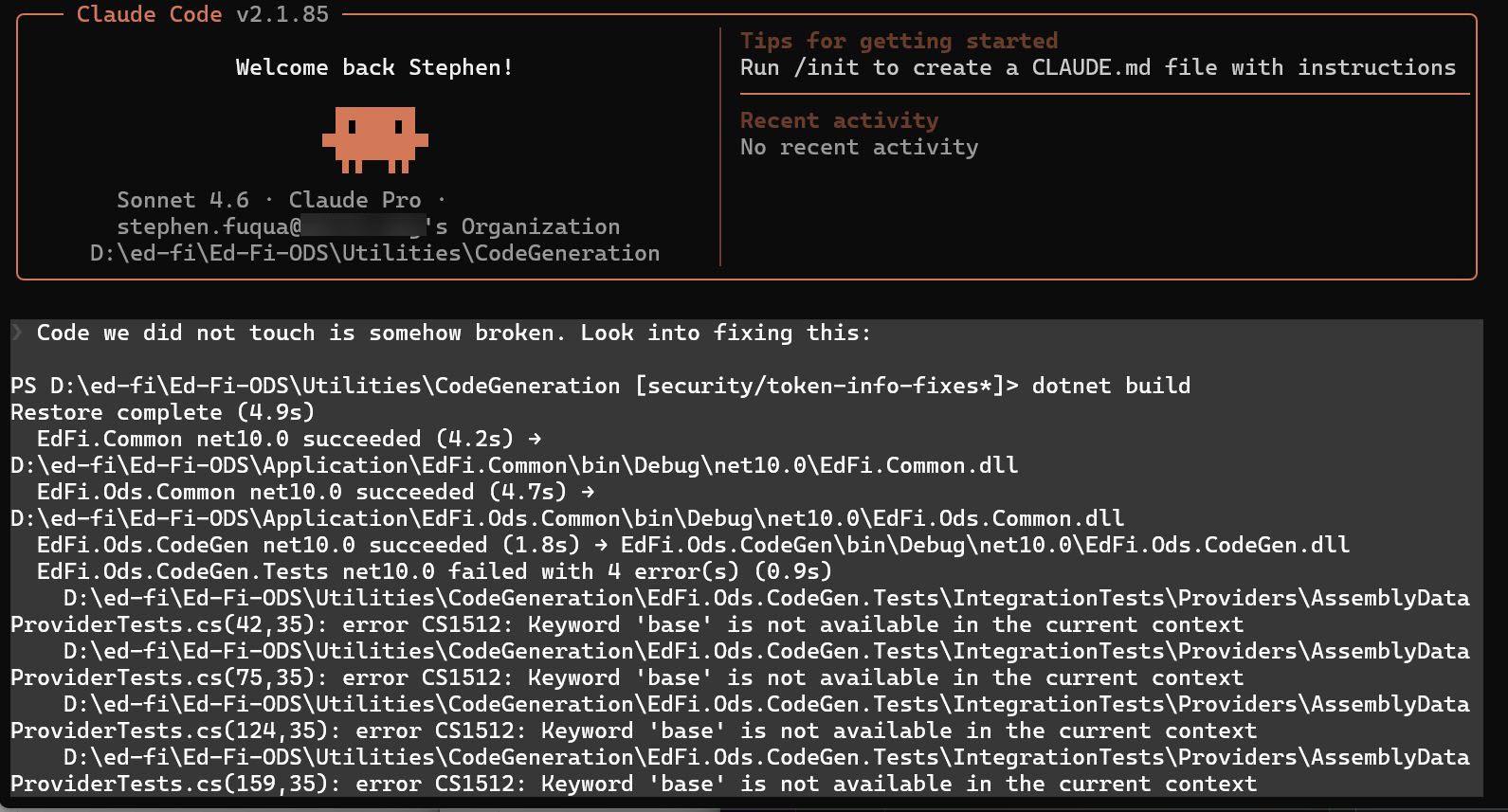
For all of last year, I wondered why anyone would use the CLI version of Claude Code and similar tools. I asked a colleague about this a couple of times, and still had trouble getting it.

Until I sat down and used the CLI to perform my work. As a knowledge worker, if you haven't used copilot or claude or (favorite tool) in the terminal, you are truly missing out.

🔝 Top 3 reasons I like this experience:

Claude Code CLI

The Inward Turn

· 5 min read

Bahá'u'lláh's teachings focus, at their core, on the concept of the essential unity of humanity: that we are biologically one "species", we should expand our notions of belonging and compassion to the entirety of humanity, and that doing so is the road to peace. [1]

Another of His teachings is the concept of moderation [2]. One manifestation of that moderation is in the balancing act between "units" of humanity: individual, family, community, institutions, government. Each unit has its prerogatives [3], its spheres of action, overlapping one another, seeking to avoid infringement on the others whilst simultaneously protecting the harmony of all.

Commemorating the Birth of Bahá'u'lláh

· One min read

Today we are celebrating the second of the Twin Holy days in the Bahá'í calendar: the birth of Bahá'u'lláh, founder of the Bahá'í Faith, in 1817. Yesterday we celebrated the birth of the Báb, born in 1819, who as an independent messenger from God both declared a new religion as a break from Islam, and prophesied that another, greater revelation would come soon after His own. Both were born in Persia, which is today known as Iran. In the lunar calendar used by the Muslim world, their births fell on consecutive days. Consequently, Bahá'ís around the world celebrate them as the "Twin Holy Days".

Entrance to the Bahjí Pilgrim House

Entrance to the Bahjí Pilgrim House, near the Shrine of Bahá'u'lláh (source)

Continue...

GitHub Copilot and Signed Commits

· 4 min read

GitHub Copilot Coding Agent is an impressive and powerful tool for "autonomously" completing development tasks running in GitHub's environment. Like any tool, there is a learning curve ahead before any of us become truly high functioning, beginning with the statement of a well crafted prompt.

⚠️ But I have a concern: lack of commit signing. Should that stop us from adopting Coding Agent? TL;DR conclusion: time to relax the commit signing requirement.

Initial Experiments with GitHub Copilot in Agent Mode

· 5 min read

GitHub CoPilot recently promoted Agent mode as a full feature in VS Code. Many writers and commenters in the blogosphere think competitors are still better; perhaps they're right. But this is the one I have, and Microsoft is innovating rapidly - seeing that first hand at Microsoft Build even as I type this. So in recent days I've performed three initial experiments that I want to share. Not because I'm doing anything brilliant: just trying to find tasks that might be a good fit, learn how to interact with the tool, and share a bit to help others in my proximity.

Lesson: be patient, and be in a learning mode. Not just waiting for it to finish (might take several minutes), but also in getting the right results. I remarked on a failure (below) to my colleague Jason Hoekstra; he suggested that I simply undo and try again. It was the right advice. Experiment and build an intuition.

Below I describe three experiments and outcomes.

Docker Containers in the SDLC: .NET Core SDK

· 10 min read

Containerization of an application benefits operations of the application by solving the problem of "it works on my machine" (at least, for the application itself). The container holds the operating system and all needed components. Once you have Docker on a host - whether localhost, on-prem data center, or in the Cloud - you can run the application with greater confidence, knowing that the application will execute the same in all environments.

But the benefits of containerization can also shift left in the development lifecycle. For example: have you ever needed to revisit an older application, and realized that you don't have the SDK on your machine? Instead of installing the SDK locally, you may be able to run the SDK in a Docker container.

The first henbit of the season

Lamium amplexicaule aka henbit, the first flower to appear in my yard this year.

Addressing the Elephant in the Room – AI – at the Data Day Texas 2025 Town Hall

· 4 min read

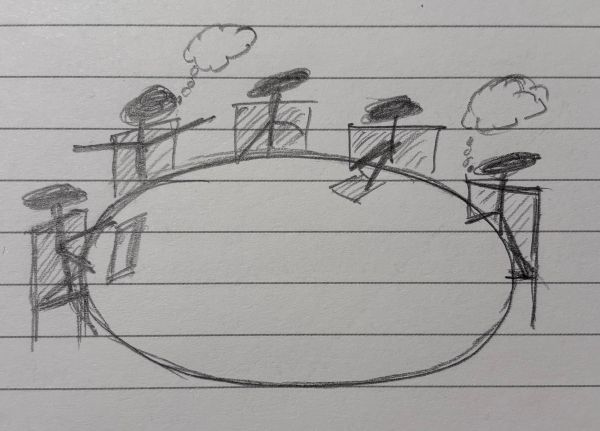
Data engineering gurus Joe Reis and Matthew Housley once again led a closing town hall at Data Day Texas. Rather than opining from the front, they turned the session over to the wisdom of the crowd. Housley seeded the conversation with a single question – “what is the elephant in the room?” – and the room was ready with an answer: AI. In particular: what is AI going to do to my job?

Given a room full of strangers, some participants were remarkably open about their fears. Perhaps knowing that the audience is composed of fellow data geeks helped to establish a sense of vulnerability. These fears were being expressed by the people who, in theory, should be the ones developing expertise in using AI tooling. But that’s how disruptive the technologies may be: even the data experts are uncertain and afraid.

Balloon scarecrow

Perhaps 20 years from now we'll look back and wonder what the fuss what all about, just as I wonder what the backstory was on this balloon-based scarecrow protecting raspberries in my backyard circa 2006. By Stephen A. Fuqua.

Grudgingly Accepting AI Coding Assistants

· 7 min read

As a software engineering director building open source products, I have prohibited my teams from using AI coding assistants due to concerns about intellectual property and questions about the risks and real world effectiveness of AI coding assistants. It is now time to allow and even encourage AI coding assistants, with guardrails.

Balcones National Wildlife Refuge, by Stephen A. Fuqua

Balcones National Wildlife Refuge, December 2024, by Stephen A. Fuqua

safnet logo