69 posts tagged with "nature"

View All Tags

Winter

· 3 min read

Winter was once a midly depressing time for me, as it is for most: short, cool days, brown grass, bear branches. Obviously this is Texas not Minnesota, otherwise: shorter, super-cold days, car stuck in snow or sliding on ice (but the grass was still green - under the snow - and the branches would often have a delicate coating of the white stuff). Fractals and birds started changing me some years ago. This winter has only confirmed that.

hawk

Red-tailed Hawk, in a pecan tree outside my patio, today.

Fracking: a Great Distraction from Renewables and Conservation

· 3 min read

lighting tap water on fire

The Sky Is Pink, from the director of Gasland, makes a potent argument that we need to resist ANY gas drilling, but particularly fracking with its permanently toxic benzene, toluene, etc. In middle school I recall writing a paper for science class, about sources of groundwater pollution in Texas. Improperly-capped oil and gas wells were a major source. I was able to find the scientific research there in my middle school and public libraries. This short film reminds us that a significant increase in the number of wells translates to a significant increase in the number of leaking wells that pollute our water supplies.

Wetlands Conservation and Advocacy

· 4 min read

This past week's terrible storm out East provides a reminder of the importance of our ecological infrastructure; in particular, wetlands. The lessons that we did not heed from Hurricane Katrina will perhaps take hold with Hurricane Sandy impacting the nation's commercial heart: in addition to supporting relief efforts now, it is important for us to consider long-term mitigation against the impact of future large storms, which are likely to be more powerful and more frequent (dead link removed; SF 2025 removed; SF 2025) than in centuries past. Instead of, or in addition to, relying on massive levies, seawalls, and the like, we need to support public and private endeavors to restore vital natural systems.

egret

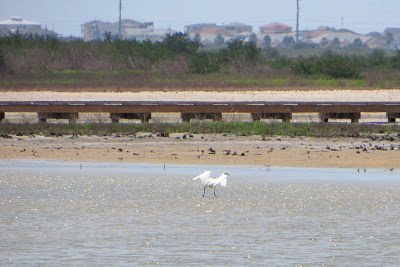
White-morph Reddish Egret, doing the Reddish Egret dance, in a wetland on Texas's Mustang Island

Struggling to feel fully informed about fracking

· 3 min read

two sides of one coin

On the one hand, fracking has been responsible for earthquakes and creates toxic water that must be locked away interminably. On the other hand, cheap natural gas is replacing coal and thus lowering the projected greenhouse gas emissions in the U.S., thanks in no small part to fracking. Furthermore, it is one of the few growth industries in America, helping the economy recover from hard times. They say the earthquakes can be avoided by better techniques, but I have not heard anything positive about the water supply. In some ways, this feels worse than nuclear fission, which provides the POTENTIAL for nasty poisoning of the environment, whereas fracking by definition requires destruction of increasingly scarce (at least here in Texas) water.

Dallas Interfaith Power & Light - "Power Surge"

· One min read

Dallas Interfaith Power & Light will be hosting a screening and round-table discussion of the Nova Documentary Power Surge, on Monday, September 24, 7:00 PM. This film looks at the state of "green energy" in the United States and the potential impact of technology on softening the blow of global climate change. The event will be held at the Dallas Baha'i Center, 9400 Plano Rd, Dallas, TX (south of Walnut Hill, north of E Northwest Hwy).

In addition, participants of this new faith-based initiative will be presented with an opportunity to comment on the draft Mission and Principles.

Love God Heal Earth, by Rev Canon Sally G. Bingham, et al.

· 3 min read

book cover

Love God Heal Earth is a compilation of essays, from leaders of 11 religions and denominations, that delve into the religious call for a transition to a sustainable way of life. While not devoid of science, this book presents a deeply spiritual, personal, and hopeful message that moves beyond the intellectual reality of global climate change. In other words, it is a powerful complement to the grim facts of An Inconvenient Truth.

Public Comment on Proposed EPA Standards for New Fossil-Fuel Power Plants

· 4 min read

The EPA has a proposed new standard for fossil fuel-burning power plants, which will be constructed in the future, that will help ensure a lower carbon future and hopefully spur innovation in the electric industry. They are accepting public comments through June 25th.  There are a number of organizations that will help you provide comments directly to the EPA, such as the National Council of Churches (dead link removed; SF 2025) or the Union of Concerned Scientists (dead link removed; SF 2025). My letter, with extra citations, is below.

Psalm 96 for Earth Day

· One min read

Let the heavens rejoice, let the earth be glad;
    let the sea resound, and all that is in it.
Let the fields be jubilant, and everything in them;
    let all the trees of the forest sing for joy.

Psalm 96:11-12 (NIV)

Let us do all humanly possible to preserve and restore heavens, earth, sea, fields, and trees — before we find ourselves alone in our worship.

Love Thy Neighbor: Ethic for Sustainability

· One min read

In preparation for Earth Day next weekend, I was reading a bit of Love God, Heal Earth this morning. I was reminded of the passage about "love thy neighbor as thyself", and its implications for the ethics of sustainability. Who is your neighbor? Does it include someone a state away? In another country? Continent? What about the people of the future? This famous passage can be interpreted, in modern context, as a call for eco-justice, which includes leaving a sustainable way of life for future generations. Matthew, chapter 22, verses 36 - 39 (NIV)

"Teacher, which is the greatest commandment in the Law?"

Jesus replied: "‘Love the Lord your God with all your heart and with all your soul and with all your mind.’ This is the first and greatest commandment. And the second is like it: ‘Love your neighbor as yourself.’"

Keystone Pipeline: NIMBY

· 3 min read

Lately I've been wondering if the Keystone Pipeline isn't more of a NIMBY than anything else. NIMBY stands for Not In My Backyard, and is typically a reference to well-off individuals and communities decrying the building of some unwanted facility "in their backyards" — that is, just down the street or in the general vicinity. For example, in St. Paul, MN there has been an outcry over plans for an electricity-generating incinerator (dead link removed; SF 2025 removed) on the edge of the neighborhood in which I used to live. Now, that is a blue collar neighborhood, not particularly well-off. A classic NIMBY situation is where the well-funded are able to fend-off development, pushing it to some location where the project's opposition are not so well funded. Thus, the NIMBY-effect becomes a matter of eco-justice: the poor end up saddled with the polluting plant, though the rich derive at least as much benefit from the project.

safnet logo