171 posts tagged with "technology"

View All Tags

Getting Started with Infrastructure as Code in TeamCity

· 10 min read

Infrastructure-as-code (IaC) is the principle of configuring systems through code instead of mouse clicks (cf Packer Tips and Lessons Learned for another example). TeamCity, the popular continuous-integration (CI) server from JetBrains, enables IaC through writing scripts to interact with its REST API, or by storing projects settings in version control. This article will share some lessons learned in using the Kotlin DSL for project settings. These will include:

  1. What is Kotlin?
  2. Benefits of using Kotlin
  3. Learning Kotlin from TeamCity
  4. Debugging before committing
  5. Managing secure data
  6. Connecting to forks

The Analytics Middle Tier Grows Up

· One min read

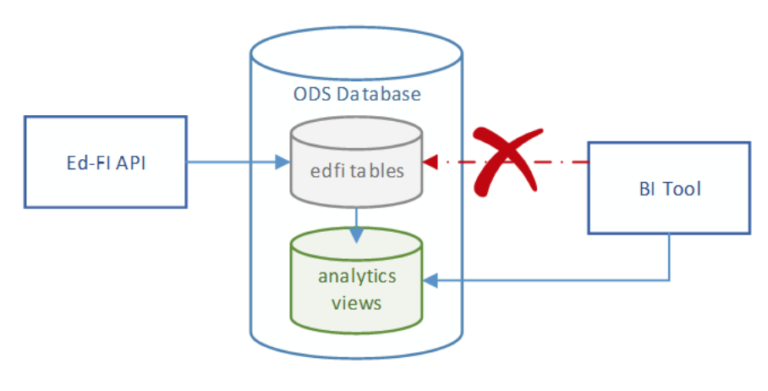
Soon the Ed-Fi Alliance will release version 2.0 of our Analytics Middle Tier, welcoming it to the "big kids' table" as a fully supported add-on to the ODS database.

When we started this project in 2018, it was with the aim of creating a production-ready proof-of-concept (a seeming oxymoron, we know) for simplifying the Ed-Fi Data Model, thus making the ODS more useful for reporting and ad hoc analytics exploration (see From Diagrams & Definitions: Solving the Analytics Reporting Gap). As such, it was released on the Ed-Fi Exchange instead of being bundled into the core ODS/API platform.

Continue reading on ed-fi.org

analytics middle tier diagram

Comparing Assertion Libraries for .NET Framework

· 7 min read

Working with a legacy codebase using NUnit and .NET Framework, I've found that there is a mix of NUnit assertions and assertions using the Should library. This library is rather old and, frankly, limited compared to Shouldly and FluentAssertions. These newer two frameworks are significantly more expressive, with APIs that cover myriad situations elegantly. Questions in front of me:

  1. Are any of these libraries really worthwhile compared to simply using NUnit's built-in assertions - either traditional or Assert.That style?
  2. If using any independent framework, which is the best choice for this code base?
  3. If selecting Shouldly or FluentAssertions, ought we to upgrade the old asserts?

My conclusion: favor Shouldly. Upgrade old asserts opportunistically for consistency, but no need to go out of the way.

Geeks in Vegas – Learning About Amazon Web Services

· 4 min read

According to Amazon Web Services (AWS) CEO Andy Jassy, at his keynote Wednesday morning, I am one of around 53,000 people from all over the world who have come out to the annual AWS re:Invent conference in Las Vegas. We come together from myriad industries and with interests that span the full range from product development to operations to account management. My personal learning objectives for the week are to deepen my understanding, and think about implications for the Ed-Fi tech stack, of four concepts:

  • Data lakes
  • Serverless
  • Business intelligence
  • .NET on AWS

continue reading on ed-fi.org...

The geeks filling in the Venetian Theater to learn about Best Practices in Big Data Analytics Architecture

From Diagrams and Definitions: Solving the Analytics Reporting Gap

· 3 min read

Have you ever tried to write a query using the Ed-Fi ODS for reporting or analytics? To say that it is challenging is to use the mildest language. The Data Standard documentation in Tech Docs is top notch. Nevertheless, going from diagrams and definitions to actual query code for, let’s say, each student’s average math grade during a grading period, is not a trivial exercise.

Originally posted on www.ed-fi.org

Upgrading safnet-directory, Part 1: Trivial Cleanup

· 6 min read

In 2014 I built a quick-and-dirty web application using ASP.NET MVC5 and AngularJS 1.0.2. There are probably millions of web applications, large and small, that are "stuck" on some older tech, often because people are afraid of the work it will take to modernize them. In this series of blog posts, I'll refactor away the tech debt and polish it up this little app to make it something to be proud of... as much as one can be proud of a simplistic proof-of-concept, anyway.

First up: basic and trivial cleanup of the solution, bringing it up to .NET 4.7.2. Future: improved testing; ASP.NET Core; Entity Framework Core and better separation of concerns; UI libraries / frameworks.

Necessity of Independent Quality Assurance and Usability Testing

· 3 min read

There is a positive a trend of developers doing more of their own testing, going beyond unit testing. However, if independent testers are cut out of the loop, then surely many applications will suffer. Case in point: a user unexpectedly entering a decimal temperatures and military time in a citizen science data collection application.

The TERN data collection application supports the Texas Estuarine Research Network's citizen science efforts on the Gulf coast of Texas and has been in operation since 2016. The code and testing were 99% all on my own, in spare time on weekends. I had tried to recruit some help with this open source project, but other than a couple of early code commits, I was unsuccessful in that regard.

Packer Tips and Lessons Learned

· 4 min read

Packer is a cross-platform tool for scripting out virtual machine images. Put another way: use it to create new virtual machines with fully automated and repeatable installations. No clicking around. Some of the benefits:

  1. Startup fresh virtual machines from a pre-created, Packer-based image in seconds instead of hours.
  2. Use the same scripts to create a local VM, a VWMARE instance, or a cloud-based virtual machine.
    • in other words, you can test your virtual machine creation process locally
  3. Helps you maintain a strategy of infrastructure-as-code, which can be version-conrolled.

API Calls from Postman Work, But Not From the Browsers

· 2 min read

Problem

I had just upgraded NuGet packages - a seemingly innocent thing to do. Everything compiles fine and I tried to run my ASP.NET WebAPI service. Testing in Postman works fine, but when I try to let the browser call an endpoint (any endpoint), I get a mysterious 500 server error with a rather unhelpful payload message of {"message":"An error has occurred."}. However, even with Chrome accessing the service, a breakpoint in the endpoint showed me that the code was executing fine. The problem is clearly occurring inside the ASP.NET engine when trying to send the response back to the browser.

safnet logo